
 2918 Spencerville Rd, #124Burtonsville, MD 20866
  (301) 421 1118


Losing all or most of your upper teeth can make everyday activities like eating, speaking, and smiling much more difficult. If you’re researching how much a full top set of dental implants costs, you’ve probably noticed that prices vary widely. That’s because every patient’s treatment plan is customized based on their oral health, the number of implants needed, the type of restoration selected, and whether additional procedures are necessary.
At Maryland Sedation Dentist, we believe patients should understand exactly what influences the cost of treatment before making a decision. This guide explains current pricing for upper arch dental implants, compares the most common treatment options, and outlines what you can expect throughout the process so you can make an informed decision about restoring your smile.
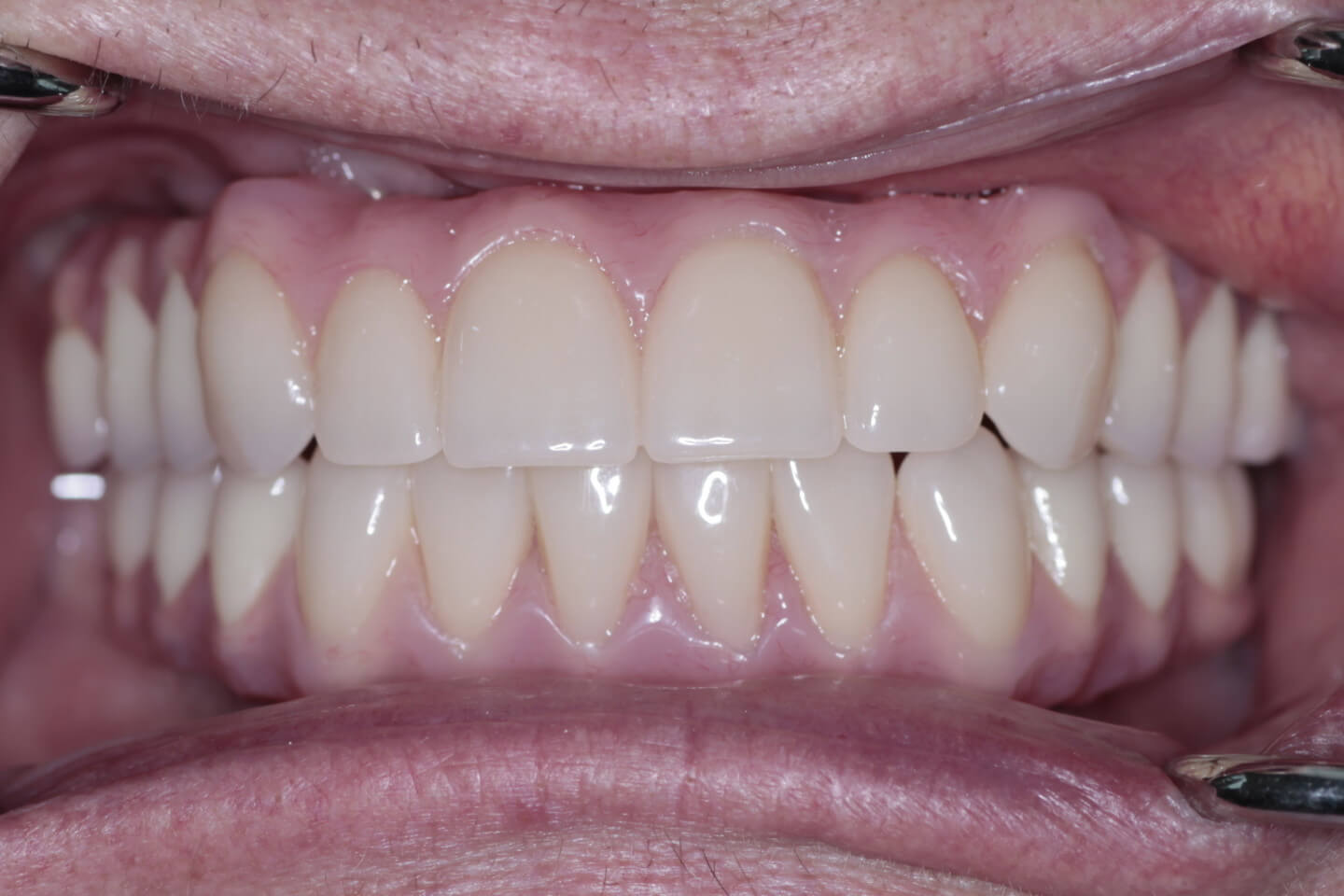
How Much Does a Full Top Set of Dental Implants Cost?
Replacing an entire upper arch with dental implants is a significant investment in your oral health and quality of life. In 2026, the average cost for a full upper arch restoration generally ranges between $20,000 and $40,000, although some treatment plans may cost more depending on the complexity of the case and the type of restoration selected.
Below is a general overview of common upper arch implant options.
| Treatment Option | Estimated Cost Range (2026) | Typical Features |
| Implant-Supported Denture | $12,000–$20,000 | Removable denture secured by implants |
| All-on-4® Dental Implants | $20,000–$30,000 | Fixed full arch supported by four implants |
| All-on-6 Dental Implants | $25,000–$35,000 | Fixed full arch supported by six implants |
| Individual Dental Implants | $30,000–$45,000+ | Individual implants replacing each missing tooth or multiple teeth |
These figures represent general estimates. Your final cost depends on your personalized treatment plan, the condition of your jawbone, the materials selected, and whether additional procedures are recommended before implant placement.
During your consultation, we’ll perform a comprehensive evaluation, obtain advanced 3D imaging, and provide a detailed treatment estimate based on your individual needs.
Top Teeth Dental Implant Video
Can You Replace Only Your Upper Teeth?
Yes. Many patients choose to replace only their upper teeth with dental implants while keeping their natural lower teeth.
This approach may be appropriate if your lower teeth are healthy, functional, and capable of properly supporting your new upper restoration. During treatment planning, your dentist carefully evaluates how your upper and lower teeth come together to ensure your bite remains balanced.
If both arches have extensive damage or tooth loss, replacing both the upper and lower teeth at the same time may provide a more predictable long-term result. Every recommendation is based on your oral health, bite, and treatment goals rather than a one-size-fits-all approach.
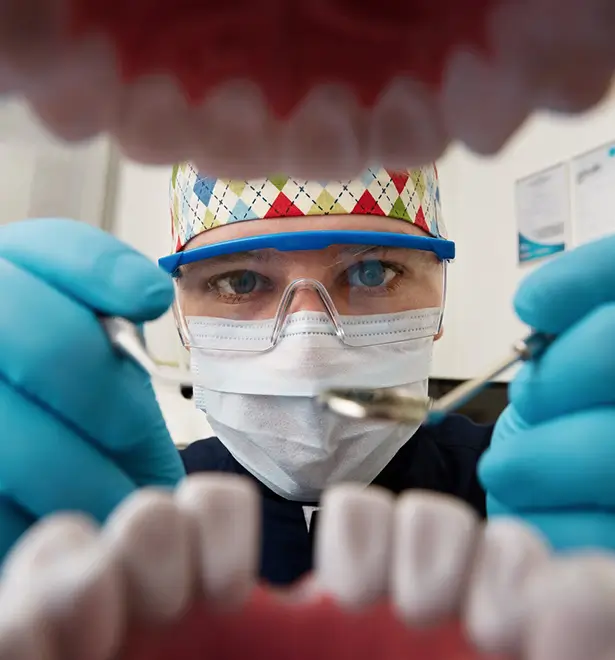
What Affects the Cost of Upper Arch Dental Implants?
No two implant cases are exactly alike. Several factors influence the overall investment required for treatment.
Type of Restoration
One of the largest factors affecting cost is the type of restoration you choose.
Patients looking for the most affordable implant-supported option may prefer a removable implant-supported denture, while others choose permanently fixed restorations such as All-on-4® or All-on-6 because they closely resemble natural teeth in appearance and function.
Your dentist will recommend the option that best fits your oral health, lifestyle, and long-term expectations.
Number of Dental Implants
The number of implants supporting your upper arch also influences treatment costs.
Some restorations use four implants, while others require six or more depending on your bone quality, bite forces, and overall treatment goals. More implants generally increase surgical complexity but may provide additional long-term stability for certain patients.
Materials Used
The materials selected for your final restoration play an important role in both appearance and durability.
Many premium restorations are fabricated from zirconia because of its strength, natural appearance, and resistance to staining. Acrylic restorations may have a lower initial cost but generally require more maintenance over time.
Your dentist will explain the advantages of each option so you can choose the restoration that best fits your needs and budget.
Bone Grafting and Preparatory Procedures
Not every patient has enough healthy jawbone to immediately support dental implants.
If significant bone loss has occurred after tooth loss, bone grafting may be recommended to strengthen the foundation before implants are placed. Additional procedures such as tooth extractions, Platelet-Rich Fibrin (PRF) therapy, or advanced 3D CBCT imaging may also be included in your treatment plan when necessary.
Although these procedures can increase the overall investment, they help create the stable foundation needed for long-term implant success.
Comparing Your Upper Arch Treatment Options
Choosing the right treatment involves more than comparing prices. Each option offers different advantages in terms of stability, maintenance, appearance, and long-term value. Your dentist will recommend the option that best supports your oral health while fitting your lifestyle and goals.
Your candidacy depends on factors such as bone density, gum health, medical history, and how many teeth are missing. Advanced imaging helps determine whether implants can be placed immediately or if preparatory procedures are needed. A personalized plan ensures predictable results and long-term success for your upper arch restoration outcomes.
All-on-4® Dental Implants
All-on-4® is one of the most popular solutions for replacing an entire upper arch. This treatment uses four strategically placed implants to support a fixed bridge of replacement teeth.
For many patients, All-on-4® provides an excellent balance between stability, function, and affordability. Because the implants are placed at specific angles, some patients with mild bone loss may avoid more extensive bone grafting procedures.
Benefits of All-on-4® include:
- Fixed teeth that remain securely in place
- Improved chewing ability
- Natural-looking appearance
- Shorter treatment time for many patients
- Fewer implants than traditional full-mouth restorations
All-on-6 Dental Implants
All-on-6 follows the same concept as All-on-4® but uses six implants to support the upper arch. The additional implants distribute biting forces over a larger area and may provide increased stability for patients with sufficient bone density.
Although All-on-6 generally costs more because additional implants are placed, some patients benefit from the extra support, particularly if they have stronger chewing forces or want maximum long-term stability.
Individual Dental Implants
Individual dental implants replace each missing tooth with its own implant and restoration whenever appropriate. This option most closely replicates natural teeth because every implant functions independently.
While individual implants often provide outstanding aesthetics and function, they usually require more implants, additional surgery, and a greater investment than full-arch restorations such as All-on-4® or All-on-6.
For patients who have recently lost their teeth and still have excellent bone support, individual implants may be an appropriate option.
Comparing Upper Arch Implant Options
| Treatment | Fixed or Removable | Typical Number of Implants | Relative Cost |
| Implant-Supported Denture | Removable | 2–4 | Lowest |
| All-on-4® | Fixed | 4 | Moderate |
| All-on-6 | Fixed | 6 | Higher |
| Individual Dental Implants | Fixed | 8–12+ | Highest |
There isn’t a single solution that’s right for everyone. During your consultation, we’ll explain the advantages of each option and help you choose the treatment that provides the best combination of function, aesthetics, and long-term value.
What Is the Healing Timeline?
Every patient’s recovery is unique, but most upper arch implant cases follow a similar treatment timeline.
Initial Consultation
Your treatment begins with a comprehensive examination, digital X-rays, and 3D CBCT imaging. We’ll evaluate your oral health, discuss your goals, and determine which implant option is right for you.
Preparatory Treatment
If necessary, tooth extractions, bone grafting, or other preparatory procedures are completed before implant placement to create a stable foundation for your new smile.
Implant Placement
Your implants are surgically placed while you’re kept comfortable with the appropriate level of anesthesia or IV sedation. In many cases, temporary teeth can be attached the same day, allowing you to leave with a functional smile.
Healing Period
During the next three to six months, the implants gradually fuse with your jawbone through a natural process called osseointegration. This healing period creates the stability needed to support your permanent restoration.
Final Restoration
Once healing is complete, your custom-made upper arch restoration is fabricated and securely attached to your implants. After making final adjustments for comfort and bite, your treatment is complete.
Does Insurance Cover Upper Arch Dental Implants?
Dental insurance coverage for upper arch dental implants varies considerably from one provider to another. While many plans don’t cover the full cost of implant treatment, some may contribute toward specific portions of your care.
Depending on your policy, benefits may be available for:
- Initial consultations
- Diagnostic imaging
- Tooth extractions
- Certain restorative procedures
- Implant-supported prosthetic components
Most dental insurance plans have annual maximum benefits, which often cover only a portion of the total treatment cost. Before treatment begins, our team can review your benefits, explain your estimated coverage, and provide a detailed treatment plan so you know what to expect.
It is also important to understand that insurance companies often classify dental implants as an elective or major restorative procedure, which can limit reimbursement. However, even when implants themselves are not fully covered, many patients still receive partial benefits that significantly reduce out-of-pocket expenses.
Coverage may also vary depending on whether the procedure is considered medically necessary, such as in cases of trauma, infection, or severe tooth loss. Our office can help you submit pre-authorizations and documentation to maximize any eligible benefits and avoid unexpected costs.
Financing Options
We understand that replacing an upper arch with dental implants is a significant investment. To help make treatment more affordable, we offer financing options that allow qualified patients to spread the cost into manageable monthly payments.
Financing may allow you to:
- Begin treatment sooner instead of delaying care
- Choose the treatment option that’s best for your long-term oral health
- Budget for treatment with predictable monthly payments
In addition to third-party financing programs, many patients also take advantage of flexible payment plans that can be tailored to their financial situation. These options often include low-interest or interest-free promotional periods, depending on credit approval.
Our team works closely with patients to find a plan that fits comfortably within their monthly budget so that cost does not become a barrier to restoring their smile. During your consultation, we will walk you through all available options in detail and help you complete any necessary applications.
Long-Term Maintenance
One of the greatest advantages of dental implants is their durability. However, like natural teeth, they require ongoing care to remain healthy and functional.
Maintaining your upper arch dental implants includes:
- Brushing twice daily
- Cleaning around the implants as instructed
- Attending regular dental checkups and professional cleanings
- Having your restoration periodically evaluated for normal wear
Unlike natural teeth, implants cannot develop cavities. However, the surrounding gums and supporting bone still require excellent oral hygiene to remain healthy. Patients should also use specialized cleaning tools such as interdental brushes or water flossers to remove plaque buildup in hard-to-reach areas around the implant bridge.
Avoiding tobacco products is strongly recommended, as smoking can increase the risk of implant complications and gum disease. Routine professional maintenance visits allow your dentist to monitor bone stability, check bite alignment, and ensure the prosthetic remains secure and comfortable over time.
With proper home care and routine dental visits, dental implants can provide dependable function for decades, making them one of the most predictable long-term tooth replacement solutions available.
Frequently Asked Questions
Most patients can expect a full upper arch restoration to cost between $20,000 and $40,000, although the final price depends on the number of implants, restorative materials, bone quality, and whether additional procedures are required.
Yes. If your lower teeth are healthy and your bite is stable, replacing only the upper arch is often an excellent treatment option.
Many patients achieve excellent results with All-on-4® implants. However, some patients may benefit from All-on-6 or another treatment approach depending on their bone quality, bite, and long-term goals.
Not everyone requires bone grafting. During your consultation, we’ll evaluate your jawbone using advanced 3D imaging to determine whether additional bone support is needed before implant placement.
Most upper arch implant cases take approximately four to eight months from consultation to placement of the final restoration, depending on healing and whether preparatory procedures are required.
With proper care, dental implants can last for decades. Your final restoration may eventually require maintenance or replacement because of normal wear, but the implants themselves are designed to provide long-term support.
Many patients prefer dental implants because they provide greater stability, improved chewing ability, better speech, and support for long-term jawbone health compared with traditional removable dentures.
Schedule Your Full Upper Arch Implant Consultation
If you’re considering replacing your upper teeth with dental implants, the best way to understand your treatment options and costs is through a comprehensive consultation. At Maryland Sedation Dentist, we’ll evaluate your oral health, explain your options, and create a personalized treatment plan designed around your needs.
Whether you’re exploring All-on-4®, All-on-6, implant-supported dentures, or individual dental implants, our experienced team will help you choose the solution that best fits your smile, lifestyle, and budget.
Contact Maryland Sedation Dentist today to schedule your consultation and learn whether a full upper arch of dental implants is right for you.
*Nobel Biocare, NobelProcera, NobelGuide and All-on-4 are trademarks of the Nobel Biocare group.

0 Comments
No comments yet. Be the first to comment!
Comments are closed.